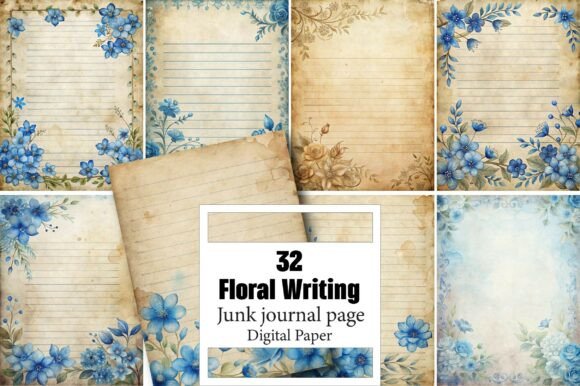
Floral Writing Junk Journal Pages: The Core Element for Integrated Creative Workflows
In the realm of handmade and digital crafts, the term Floral Writing Junk Journal Pages represents more than a simple graphic asset. It signifies a versatile, high-quality foundational component designed to streamline and enhance a wide spectrum of creative and commercial processes. Understanding its role within broader workflows—from initial concept to final product—is key for hobbyists, entrepreneurs, and professionals aiming for efficiency, consistency, and impactful results.
A Foundational Asset in the Modern Creator’s Toolkit
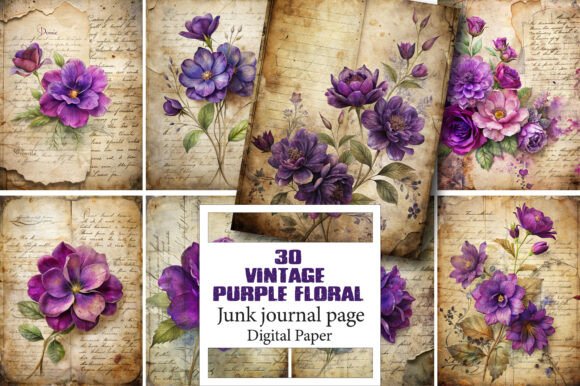
Floral Writing Junk Journal Pages are typically offered as high-resolution 300 DPI JPG files, free of watermarks, and instantly downloadable. This format is deliberately chosen for integration. The floral and handwritten aesthetic provides a ready-made visual tone—romantic, personal, artistic—while the technical specifications ensure compatibility with both physical and digital production lines. This asset sits at the crossroads of inspiration and execution, acting as a prepared element that eliminates the need to create base artwork from scratch for every new project.
Its application spans two primary domains: the tactile world of handmade crafts like junk journals, greeting cards, and decoupage art, and the digital sphere of graphic design for social media backgrounds, website graphics, and digital planner covers. By serving both, it allows creators to maintain a cohesive visual brand or personal style across multiple mediums, a critical factor for small business owners and serious hobbyists.
Integration Before the Project: Planning and Preparation
The practical use of Floral Writing Junk Journal Pages begins in the planning stage. For a crafter preparing for a wedding stationery suite—invitations, napkins, tags—these pages can be selected and resized as the unifying graphic theme before any physical materials are purchased. An educator designing a digital presentation on botany or creative writing might incorporate them as slide backgrounds early in the deck layout, establishing a consistent and engaging visual framework. This pre-project integration reduces decision fatigue and ensures all subsequent components are compatible.
Preparation involves assessing the asset against your toolchain. The 300 DPI resolution is essential for high-quality physical printing on items like mugs, t-shirts, or wrapping paper, but it also means the files are large and detailed enough for crisp digital use. Ensuring your software—whether Adobe Photoshop, Canva, a sublimation printer driver, or a simple word processor—can handle JPG files at this resolution is a basic but vital compatibility check. Organizing these downloaded files into a dedicated digital library, perhaps categorized by color scheme or project type, turns a single purchase into a reusable resource bank, enhancing long-term workflow efficiency.
Workflow Example: Launching a Small Stationery Line
Consider a freelancer or small business owner launching a line of handmade stationery. The process might start with selecting a set of Floral Writing Junk Journal Pages as the core design element. These pages are then adapted sequentially: first, they are resized and formatted for greeting cards and writing paper; next, elements are extracted to create matching gift tags and product labels for candle or soap packaging; finally, the same graphics are adjusted for digital use as promotional social media backgrounds and email newsletter headers. This approach ensures brand consistency across all touchpoints, from physical product to digital marketing, while drastically cutting down on original design time for each individual item.
Execution During the Project: Application and Adaptation
During the active creation phase, these pages function as a modular component. In junk journaling, a page might be printed, trimmed, and physically collaged with other ephemera, interacting directly with ribbons, stamps, and handwritten notes. In digital graphic design, the same file might be layered under text in a poster layout, cropped for a phone case template, or color-adjusted for a website background. The key to smooth execution is understanding the asset’s adaptability. The instruction “Dimensions can be resized to suit your needs” is not merely a feature; it is a workflow directive. It empowers the user to mold the asset to the precise requirements of a tumbler wrap, a KDP book cover, or a party invitation without compromising quality.
Practical implementation tips here focus on quality control. When resizing for large-format printing like wall art or posters, maintain the 300 DPI setting to avoid pixelation. For smaller items like coasters or stickers, you might increase the physical dimensions while keeping the resolution high. When using the pages for sublimation or printing on fabrics, a test print on similar material is advisable to ensure color translation meets expectations. This hands-on testing integrates the digital asset with your physical production tools, closing the loop between digital preparation and real-world output.
Post-Project Extension: Long-Term Use and System Building
The value of Floral Writing Junk Journal Pages extends beyond a single project. For the productivity-minded user or entrepreneur, they become part of a reusable asset system. After using a floral page set for a successful baby shower decoration suite, those same files can be archived and later pulled for a bridal blog graphic, a nostalgic bookmark design, or background paper in a future junk journal. This long-term use turns a one-time download into a sustainable resource, improving organization and reducing recurring costs for new design elements.
Integration with other resources is also a post-project consideration. These pages can be combined with purchased font packs for consistent typography, with stock photo subscriptions for more complex collages, or with physical crafting supplies like specific paper stocks and inks. Building a personal or brand “style guide” that references these floral pages as a core pattern encourages consistency across future unrelated projects, whether for DIY home decor, digital planner covers, or professional presentation templates.
Observations on Usability and Creative Efficiency
A crucial observation for users is that these pages bridge the gap between unique handmade appeal and digital scalability. A handmade junk journal feels personal and artisanal because each page is individually curated and placed. Using a digitally sourced floral writing page as a base does not detract from this; it provides a high-quality starting point that the creator then personalizes. For the small business owner selling handmade notebooks or gift tags, this allows for product line consistency while still enabling handmade finishing touches. The workflow becomes a hybrid: digital efficiency in base design, coupled with tactile artistry in final assembly.
Furthermore, for marketers and bloggers, these assets offer a quick route to professional-looking graphics without needing advanced illustration skills. A floral writing background can elevate a simple social media post about a craft tutorial or a product launch, integrating seamlessly with platform-specific tools for text overlay and filtering. This speeds up content creation workflows, allowing more time for strategy, engagement, or the actual crafting process itself.
Smooth Integration into Diverse Routines
The ultimate goal is to integrate Floral Writing Junk Journal Pages so smoothly they become a natural part of your creative or operational rhythm. For the educator, it might mean having a folder of these backgrounds ready to drag into lesson plan presentations. For the collage artist, it could involve printing a variety of pages in bulk to have a ready stash for spontaneous art sessions. For the entrepreneur, integration means including these files in the standard product development checklist: 1. Define product, 2. Select core graphic asset (e.g., floral pages), 3. Adapt for format, 4. Produce.
Successful integration hinges on viewing these pages not as a finished product, but as a high-quality raw material. Their floral writing motif provides immediate aesthetic direction, and their technical format provides broad applicability. By factoring them into your planning, leveraging their adaptability during execution, and archiving them for future use, you transform a single digital download into a multifunctional tool that supports efficiency, consistency, and creative expression across an astonishing range of projects—from the deeply personal junk journal to the commercially scaled website graphic.