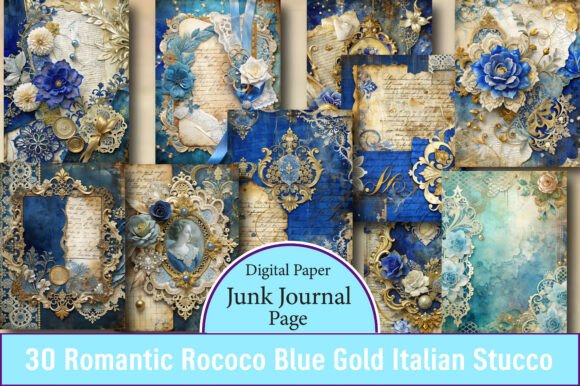
Romantic Rococo Blue Gold Italian Stucco: A Foundation for Unbounded Creativity
The digital art space is saturated with generic patterns and fleeting trends. For creators who value depth, elegance, and a tangible sense of history in their work, finding a versatile and high-quality asset is crucial. Romantic Rococo Blue Gold Italian Stucco is such a resource. It is not merely a digital image; it is a meticulously crafted design motif inspired by the opulent, asymmetrical artistry of the Rococo period, reinterpreted through a contemporary lens of blue and gold. This specific pattern serves as a foundational visual element, a starting point from which a vast array of creative and professional projects can evolve.
Integrating a Timeless Motif into Modern Workflows
Understanding where this asset fits begins with recognizing its role as a core design component. Whether you are a graphic designer preparing a client’s branding suite, a small business owner developing product labels, or a hobbyist crafting a unique junk journal, the pattern acts as a cohesive visual thread. Its high-resolution 300 DPI JPG format ensures it is ready for integration from the very first stage of your project planning. Before sketching a mock-up or sourcing physical materials, you can incorporate this digital file into your digital drafts, knowing it will scale without loss of quality for both print and digital outputs.
Preparation and Asset Organization
A smooth creative process hinges on preparation. Upon downloading Romantic Rococo Blue Gold Italian Stucco, the immediate step is to organize it within your digital asset library. Create a dedicated folder for "Patterns & Textures" or project-specific collections. Renaming the file to include keywords like "Rococo_BlueGold_Base" can aid long-term retrieval. Its compatibility is broad: it works within standard graphic software like Adobe Photoshop or Illustrator, free alternatives like Gimp or Inkscape, and even directly in presentation tools or digital planner applications. Ensuring you have the right software accessible for your intended use case—sublimation software for tumbler wraps, or a simple word processor for designing greeting card layouts—is part of the pre-project setup.
Practical Implementation Across Diverse Use Cases
The true value of this stucco pattern emerges in its application. Its design—complex yet balanced—lends itself to both focal points and subtle backgrounds. Here is how it interacts with different tools, mediums, and stages of project execution.
For Physical Crafting and Handmade Goods
In hands-on projects like junk journal creation, decoupage, or making party invitations, the pattern often serves as the first layer or a key embellishment. During the assembly phase, you might print the design onto specialty paper, vellum, or even sticker sheets. It interacts directly with physical tools: scissors, glue, laminators. A practical tip is to test print a small section on your intended paper stock to check color fidelity before committing to a full print run. For product labels for candles or soap, the pattern provides an immediate luxury aesthetic; you can overlay your text and logo information using design software, then print and cut the labels to apply during your product's final packaging stage.
For Digital Design and Branding Work
Digital creators and entrepreneurs utilize this asset in a different workflow sequence. When designing website graphics, social media backgrounds, or digital planner covers, the file is imported as a layer. Its interaction here is with other digital assets: logos, font sets, and interface elements. The blue and gold tones can dictate your accompanying color palette, promoting consistency across a whole campaign. For a freelancer creating a client's stationery suite, the pattern might be applied to the letterhead background, then subtly echoed in the business card and gift tag designs, creating a unified brand identity. Usability is high because the un-watermarked, high-resolution file allows for seamless cropping and blending.
Optimizing for Efficiency and Quality Control
Integrating any new asset into a recurring workflow requires attention to efficiency and output quality. For frequent users, such as a stationery shop owner or a blogger producing regular graphics, establishing a template system saves time. Create a base template in your design software with the Romantic Rococo Blue Gold Italian Stucco pattern already placed and locked as a background layer. New projects then begin from this template, ensuring visual consistency and reducing repetitive setup tasks.
Quality control is inherent in the file's specifications—300 DPI guarantees professional print readiness. However, long-term use depends on your own file management. Keep the original downloaded master file untouched in a backup location. Use duplicated, project-specific copies for actual work to preserve the original quality. When resizing dimensions, always maintain proportional scaling to avoid distorting the intricate stucco detail.
Workflow Examples in Specific Contexts
- Event Planner Designing a Wedding Suite: The process might start with selecting the pattern for the invitation backdrop. During the design phase, it is combined with typography and floral iconography. After finalizing the digital design, it is sent to a printer for the invitations, while also being adapted digitally for the wedding website graphics and digital thank-you cards, ensuring a seamless experience from the guest's first touchpoint to the last.
- Content Creator Building a Social Media Series: Before a campaign launch, the creator could use the pattern to design a series of cohesive post backgrounds, video thumbnails, and a branded cover image for their YouTube channel. During the campaign, each new piece of content uses a variation of this base, creating recognizable visual continuity for the audience.
- Author Publishing a Book: An indie author might use the pattern in the book cover design process, working with a graphic designer to integrate it into the cover layout. After publication, the same motif can be repurposed for promotional materials like bookmarks, social media posts, and signage for book launch events, extending the book's visual identity into marketing.
Beyond the Single Project: Long-Term Creative Utility
The versatility of Romantic Rococo Blue Gold Italian Stucco encourages thinking beyond a single project. Its aesthetic is not tied to a seasonal trend but to a perennial artistic style, making it a reliable asset in your library for years. For small business owners, this means a single investment can serve multiple product lines—from initial soap labels to later expansions into gift wrapping paper and party napkins. For crafters, the same download can fuel projects across different mediums: applied to a decoupage box today, used in a digital planner cover next month, and featured in a handmade greeting card for a future event.
Integration into your routine becomes about creative muscle memory. As you use the pattern across different applications, you become adept at knowing how it crops best for a mug wrap versus how it scales for a wall art print. You learn which complementary colors and fonts pair most effectively with its blue and gold scheme, building a personal or brand style guide organically. This asset, therefore, is not just a tool for a task, but a catalyst for developing a coherent and sophisticated creative voice across all your endeavors.
Ultimately, the practical implementation of this digital design pattern is about leveraging a ready-made element of beauty to streamline your creative process, enhance the quality of your outputs, and provide a consistent visual foundation. It allows you to begin your projects from a point of strength, focusing your energy on execution, customization, and bringing your unique vision to life, supported by the timeless elegance of Rococo artistry.