The Strategic Power of Black and White Tile Patterns in Modern Creativity
In a world saturated with complex visuals, the return to fundamental, high-contrast graphics represents a deliberate choice. Black and white tile patterns are not merely a design trend; they are a strategic tool. Their timeless geometric precision offers a foundation for clarity, focus, and brand identity across a staggering array of creative and commercial applications. From defining a product's aesthetic on a sublimated mug to establishing a professional tone on a website background, these patterns provide a versatile asset for entrepreneurs, marketers, and creators seeking to communicate with impact and efficiency.
Defining Your Visual Foundation with Geometric Precision
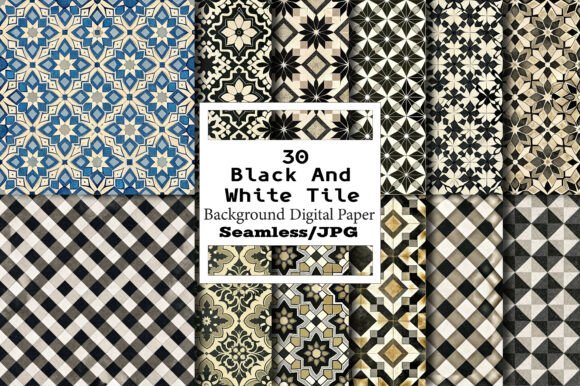
At its core, a black and white tile pattern is a structured arrangement of contrasting shapes—often squares, hexagons, or chevrons—creating a repeatable, seamless graphic. This simplicity is its strategic strength. Unlike intricate or color-dependent designs, a high-resolution black and white tile pattern delivers unambiguous visual texture. It serves as a neutral yet powerful base layer upon which you can build identity, add content, or evoke a specific mood. For professionals managing branding or product development, this means working with a design element that is inherently scalable, easily adaptable, and universally legible, whether printed on fabric at 300 DPI or displayed as a digital social media graphic.
The thoughtful use of such a pattern supports critical goals in positioning and communication. A consistent, clean geometric pattern across your product line—from candle labels to tote bags—builds a cohesive brand narrative. It signals order, sophistication, or modern minimalism without a single word. In planning your marketing collateral or product suite, starting with this versatile asset allows for efficient expansion. A single seamless pattern file can become the visual thread connecting your notebook covers, party napkins, and website graphics, ensuring every customer touchpoint reinforces the same core aesthetic.
Intentional Application Across Key Use Cases
The true value of a black and white tile pattern emerges from intentional application, not random decoration. Consider its role in enhancing customer experience. A beautifully patterned sublimation wrap on a tumbler or the elegant cover of a mini junk journal transforms a generic item into a curated, gift-worthy product. For educators or publishers, these patterns as printable fabric or digital paper packs provide a professional, ready-made resource for creating teaching aids, book covers, or presentation backgrounds, saving considerable time and design effort.
When approaching its use, first align the pattern with your project's strategic intent. Is the goal to convey luxury (for wedding invitations or bridal planner decor), playfulness (for birthday party plates and scrapbook decoupage), or reliable professionalism (for logos and corporate social media backgrounds)? The monochromatic nature of black and white tile patterns allows the same file to serve different moods based on context and accompanying elements. A key consideration before reliance is resolution and format. Ensuring your source file is high-resolution 300 DPI JPG guarantees fidelity across both physical prints (like soap labels and posters) and digital uses (like phone cases and website assets), protecting the quality of your final outcomes.
Planning for Long-Term Creative Utility
Strategic asset management is a hallmark of effective creative operations. Acquiring a well-crafted, seamless black and white tile pattern is an investment in long-term utility. Its dimensionally flexible nature means it can be resized for a mug today, a large wall art canvas tomorrow, and a small sticker the next week without losing structural integrity. This adaptability supports sustainable productivity for small business owners and freelancers who need to quickly generate cohesive designs for diverse client requests—from KDP book interiors to handmade stationery.
Practical planning involves cataloging your pattern's potential applications. Map it against your product roadmap or content calendar. Could it serve as the background for your next series of promotional graphics? Might it be printed for packaging or used in DIY project tutorials? By viewing the pattern as a multi-purpose component in your creative toolkit, you move from ad-hoc usage to strategic resource allocation. This mindset is crucial for achieving better results and scaling your output without constantly sourcing new design elements.
Navigating Risks and Maximizing Impact
While versatile, using black and white tile patterns without clear goals or context carries subtle risks. The primary risk is visual dilution. If the same pattern is applied indiscriminately to every project without consideration for audience or purpose, it can become a meaningless default rather than a strategic signature. Another consideration is market differentiation. Because geometric patterns are popular, your intentional application must be paired with unique product concepts or branding messages to stand out. A personalized pillow using the pattern becomes distinctive through the personalization, not solely through the pattern itself.
To use these patterns intentionally, always start with the end-user's experience. For a sublimation graphic destined for a t-shirt, consider how the pattern's scale interacts with the garment's cut. For a website background, assess how the contrast affects text readability. This user-centric approach ensures the pattern enhances functionality, not just aesthetics. Furthermore, layer meaning onto the geometry. In scrapbooking or junk journaling, a black and white tile pattern can symbolize order or structure within a collection of memories, adding a conceptual layer to its decorative role.
From Digital Files to Tangible Results
The journey from a downloaded JPG file to a finished product embodies modern creativity. The instant digital download of a high-quality black and white tile pattern removes technical barriers, allowing marketers, hobbyists, and professionals to immediately focus on execution. Whether the next step is sending the file to a sublimation printer for mugs, importing it into design software for playing cards, or printing it on fabric for a cute tote bag, the pattern acts as a reliable constant. This operational efficiency is a significant advantage for time-pressed creators and business owners aiming to streamline their production processes.
Realistic use cases abound. A blogger might use the pattern as a consistent border for their series of printable illustrations, building audience recognition. An entrepreneur launching a candle line could employ the pattern across all soap product labels and social media graphics, creating an instantly recognizable shelf presence. A professional hosting a webinar could use a subtle tile pattern as their presentation background, conveying organized thought and credibility. In each scenario, the decision to use the pattern is rooted in a desired outcome: cohesion, recognition, or perceived quality.
Ultimately, the strategic power of black and white tile patterns lies in their dual nature: they are both a classic design element and a flexible modern asset. By selecting them with purpose, applying them with consideration for context and scale, and integrating them into a broader creative or commercial strategy, you harness their full potential. They become more than decoration; they become a foundational part of your visual language, supporting clearer communication, stronger branding, and more efficient creation across the vast spectrum of projects you undertake.