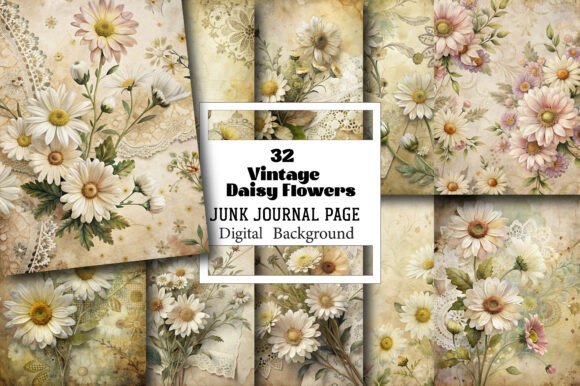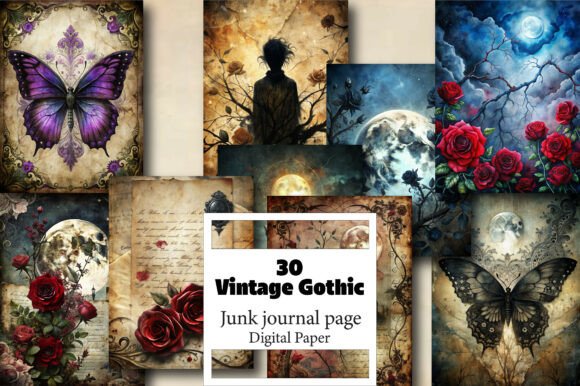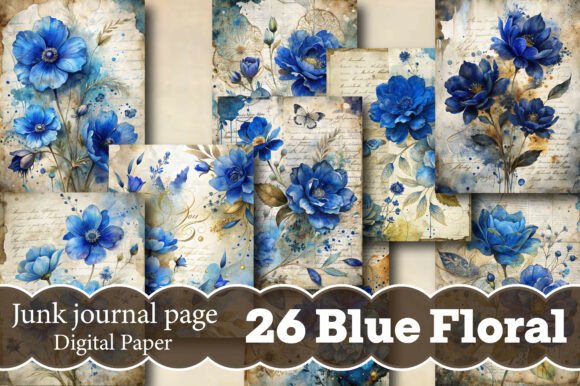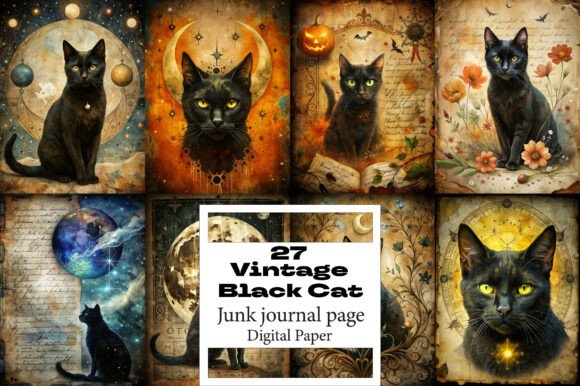
Understanding Vintage Countryside Junk Journal Pages: A Versatile Digital Resource
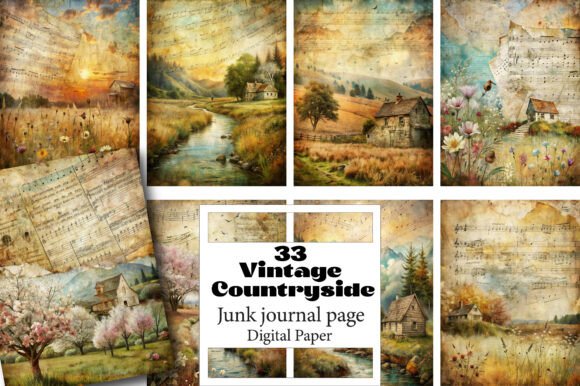
For crafters, designers, and creators looking for aesthetic resources, the market offers a wide spectrum of digital downloads, from minimalist vector packs to hyper-realistic photo collections. Within this space, Vintage Countryside Junk Journal Pages represent a distinct and highly adaptable category. This digital product is essentially a curated collection of high-resolution imagery and design elements, delivered in JPG format at 300 DPI, themed around rustic, nostalgic, and pastoral motifs. Its core distinction lies not just in its subject matter, but in its intended application as a foundational, multi-use toolkit for both physical and digital creation.
Core Characteristics and Defining Features
What sets Vintage Countryside Junk Journal Pages apart from generic digital papers or stock photos is its integrated design philosophy. The assets are created with intentional imperfections, aged textures, and a cohesive color palette that evokes a handcrafted, timeless feel. This is not a set of disparate, modern graphics; it’s a unified system of backgrounds, borders, illustrations, and patterns that work together. The 300 DPI resolution ensures that prints—whether for a greeting card or a large poster—remain sharp and professional. Furthermore, the absence of watermarks in the original files provides complete creative control, a crucial factor for professionals and serious hobbyists.
The "junk journal" aspect is key to understanding its versatility. Traditionally, a junk journal is a handmade book incorporating ephemera, found papers, and layered collages. This digital version provides the raw materials to simulate or inspire that tactile process. You receive the digital equivalent of weathered book pages, floral scraps, vintage labels, and rustic illustrations, all ready to be manipulated, combined, and printed.
Comparison with Other Digital Crafting Resources
When evaluating digital assets for creative projects, it’s helpful to compare Vintage Countryside Junk Journal Pages against other common options.
Against standard digital paper packs, this product often offers more thematic depth. A simple pattern pack might provide chevrons or polka dots, whereas this collection includes complex, scene-setting backgrounds with farmhouse kitchens, wildflower fields, or antique script overlays, enabling richer narrative projects like junk journals or storybook-style invitations.
Compared to stock photography of countryside scenes, these pages are designed as components, not finished images. Stock photos are typically used as-is; these pages are elements meant to be cut, layered, and composited. They serve as both background and building block, which is a significant functional difference.
Regarding pre-made templates for items like invitations or planner covers, Vintage Countryside Junk Journal Pages offer more flexibility but require more assembly. Templates provide a fixed structure for quick results. This collection provides the raw materials for custom, from-the-ground-up design, which is better suited for those who want unique outcomes and enjoy the process of creation.
Strengths, Tradeoffs, and Ideal Use Cases
The primary strength of this resource is its immense cross-category utility. One download can feasibly supply materials for handmade notebooks, greeting cards, collage crafting, decoupage art, party invitations, writing paper, digital planner covers, and gift tags. This makes it a cost-effective solution for creators who operate across multiple mediums, from physical paper crafts to digital social media graphics.
A related strength is its suitability for sublimation and printing on various surfaces. The high-resolution, textured designs translate well to fabrics (t-shirts), ceramics (mugs, tumblers), and wood (coasters), supporting a small business producing branded merchandise or personalized gifts.
However, there are inherent tradeoffs. The vintage countryside theme is a specific aesthetic. It is an excellent fit for projects requiring warmth, nostalgia, or a rustic charm—such as bridal shower decorations, wedding stationery, or heritage family albums. It may not be the right choice for projects needing a sleek, modern, corporate, or minimalist vibe. In such cases, a more generic or contemporary digital resource would be a better alternative.
Another consideration is the level of user skill. While the pages are incredibly versatile, maximizing their potential requires some comfort with basic graphic design software (even free tools like Canva) for resizing, cropping, and layering. For someone seeking a completely pre-assembled, ready-to-print invitation, this might involve more steps than desired. Conversely, for a seasoned crafter or designer, this flexibility is a major benefit.
Practical Applications and Decision Factors
Deciding whether Vintage Countryside Junk Journal Pages are the right choice involves evaluating your project goals, preferred style, and workflow.
- For Project Variety: If you are a multi-disciplinary creator who regularly shifts between making physical junk journals, designing digital planner covers, and printing party decorations, this single collection can unify your materials and aesthetic, offering great value.
- For Brand Consistency: Small businesses focusing on a rustic, handmade, or vintage brand identity can use these assets to create cohesive graphics across website backgrounds, social media posts, product labels, and packaging, ensuring a consistent visual language.
- For Unique Outputs: If your priority is creating one-of-a-kind items that don’t look mass-produced, the layered, textured nature of these pages allows for deep customization, unlike many pre-made templates.
However, if your needs are singular and temporary—for instance, creating a single set of modern, geometric birthday party napkins—a more targeted, theme-specific download might be more efficient. Similarly, if you require vector files for infinite scaling or transparent PNGs for easy layering, you would need to look for products offering those specific formats, as JPGs, while high-quality, have limitations in those scenarios.
Evaluating Fit for Your Creative Process
The "instant digital download" model of Vintage Countryside Junk Journal Pages aligns with an on-demand, self-directed creative process. It empowers you to start a project immediately without waiting for physical shipment, and the resizable dimensions mean you can adapt an element from a tiny gift tag to a large wall art print without losing quality.
Yet, its best fit is within a workflow that embraces hybrid creation—moving between digital design and physical assembly. For example, you might digitally compose a journal page layout using elements from the pack, print it, and then physically embellish it with ribbons or stamps. It bridges the digital and tactile worlds.
When considering alternatives, assess the scope of your ongoing work. A creator invested in the vintage aesthetic across many projects will find this a cornerstone resource. A creator who explores vastly different themes monthly might prefer smaller, more niche packs for each project. The tradeoff is between depth/cohesion and breadth/flexibility.
Ultimately, Vintage Countryside Junk Journal Pages stand out as a comprehensive toolkit for a specific but popular visual style. Their value is unlocked not by a single use, but by repeated application across your creative spectrum. By understanding their comparative position against more generic or more rigid digital resources, you can make an informed decision on whether they match your aesthetic needs, your technical comfort level, and your vision for the projects you want to bring to life.