Egyptian Junk Journal Page: A Versatile Digital Asset for Modern Creators
The Core of a Creative Toolkit
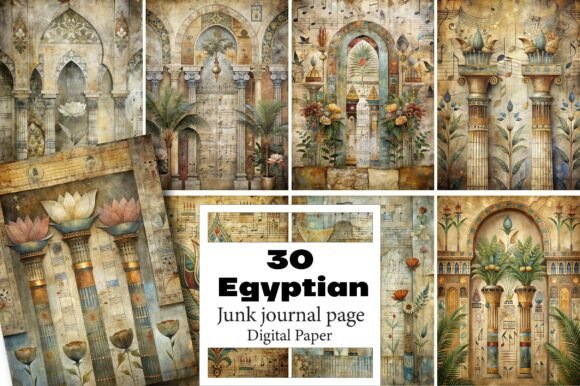
An Egyptian Junk Journal Page is more than a single image; it is a foundational digital component designed for integration. At its heart, it's a high-resolution, 300 DPI JPG file featuring motifs, patterns, and illustrations inspired by ancient Egyptian art—hieroglyphs, deities, symbols, and iconic aesthetics—reinterpreted for contemporary craft and design. This asset is delivered without a watermark, allowing immediate use upon download. Its true value lies not in isolation, but in its role as a malleable element within a broader creative or professional workflow. Whether you are a hobbyist assembling a handmade notebook or a small business owner developing cohesive product branding, this page serves as a starting point, a consistent visual thread, or a decorative accent that can be resized and adapted to suit an array of projects.
Strategic Integration into Project Workflows
Understanding where an Egyptian Junk Journal Page fits into your process is key to leveraging its utility. It functions at three primary stages: preparation, execution, and finalization.
Phase 1: Preparation and Conceptual Planning
Before physical crafting or digital design begins, this asset aids in visualization and planning. For a blogger planning a series on ancient cultures, the page can serve as a template for social media graphics or website backgrounds, establishing a thematic tone early. A freelance graphic designer might incorporate elements from the Egyptian Junk Journal Page into initial mockups for a client's book cover or event invitations, using it to explore aesthetic directions without committing to final custom artwork. This stage is about asset gathering and conceptual compatibility—ensuring the visual style aligns with the project's goals.
Phase 2: Active Execution and Application
This is the core phase where the Egyptian Junk Journal Page interacts directly with other tools and materials. Its high-resolution nature ensures quality output across various mediums.
- Physical Crafting: In junk journal creation, the page might be printed on specialty paper, trimmed, and combined with other ephemera, ribbons, and writings. It interacts with glue, scissors, and physical notebooks. For decoupage art, it is cut and layered onto boxes or furniture alongside varnish and other decorative papers.
- Digital Design: In software like Adobe Photoshop or Canva, the page is layered under text for greeting cards, cropped for digital planner covers, or repeated to create patterns for wrapping paper. It coexists with typography tools, color palettes, and other digital assets in the workspace.
- Product Development: For entrepreneurs creating tangible goods like candle labels or party napkins, the file is sent to a printer or sublimation specialist. Here, it interacts with production methods, material specifications (like tumbler wraps or mug substrates), and quality control checks to ensure the final print matches the digital fidelity.
The usability during execution hinges on its adaptability. Dimensions can be resized without loss of quality, making it compatible with standard printing sizes (like A4 for cards) or specific product dimensions (like a 20oz tumbler template).
Phase 3: Finalization and Consistency
After application, the Egyptian Junk Journal Page contributes to outcomes like brand consistency and project cohesion. For a wedding planner using it across invitations, coasters, and program booklets, it creates a unified visual experience. For a stationery shop owner, using the same asset set for gift tags, writing paper, and bookmark designs ensures product lines feel connected, aiding in marketing and customer perception. This phase is about reviewing the finished work and assessing how the integrated asset supported efficiency and a polished end result.
Practical Implementation Across Diverse Fields
The applications are vast, but successful integration requires a mindful approach.
For Hobbyists and Crafters
Start by organizing your digital downloads. Create a dedicated folder for themes like "Egyptian Assets." When beginning a junk journal, select a few key pages from your Egyptian Junk Journal Page set to act as focal spreads. Print them on paper appropriate for your journal's thickness—consider cardstock for durability or watercolor paper for a textured feel. Integrate them physically with handwritten entries, ticket stubs, or lace. The page provides a structured visual break amidst more chaotic collage elements. For scrapbooking, use elements from the page as thematic backgrounds for photos from a museum visit or a cultural event, tying memory to motif.
For Freelancers and Small Business Owners
Treat the asset as part of your commercial toolkit. If designing party decorations for a client's Egyptian-themed birthday, use the page as a base layer for digital designs. Resize it to create matching party napkin graphics and invitation backgrounds. This streamlines your workflow; you're not sourcing multiple disparate images. For KDP (Kindle Direct Publishing) book covers, extract a compelling symbol from the page, overlay it with your title text, and ensure the final composition meets Amazon's technical specifications. The key is to modify and combine—the original page is a raw material, not a final product. Always check the resolution (300 DPI) is sufficient for your print scale to avoid pixelation.
For Educators and Content Creators
Use the Egyptian Junk Journal Page to create visual aids. In a digital presentation on ancient history, segments of the page can serve as slide backgrounds, making the deck more engaging than plain templates. For a blogger, cropping a portion for a Pinterest graphic or Instagram story background adds professional, thematic flair without requiring extensive graphic design time. It interacts here with presentation software, social media scheduling tools, and content calendars. The asset helps maintain a consistent aesthetic across educational or promotional materials, which aids in audience recognition and content quality.
Ensuring Long-Term Utility and Organization
To maximize the value of an Egyptian Junk Journal Page over multiple projects, consider your digital asset management. Label files clearly (e.g., "Egyptian_JournalPage_Background_01.jpg"). Note its potential uses in a personal digital catalog—you might remember it's perfect for soap labels when a future product idea arises. Since the file is versatile, its long-term use is governed by your ability to retrieve and repurpose it efficiently. For professionals, maintaining a library of such assets reduces the time spent sourcing new graphics for every project, directly impacting workflow efficiency.
Quality control is simple but crucial. Before any print run or final upload, preview the Egyptian Junk Journal Page at its intended output size. For sublimation on t-shirts, verify the colors translate well to fabric through a test print. For digital planner covers, ensure the resized image remains sharp on various screen resolutions. This final check prevents wasted resources and ensures the asset performs as intended within the technical constraints of your chosen medium.
A Unifying Element in Disparate Processes
Ultimately, an Egyptian Junk Journal Page is a connective tool. It bridges the gap between a creative idea and its tangible or digital manifestation. For the junk journal maker, it provides historical inspiration made practical. For the entrepreneur, it offers a cost-effective design element that elevates product lines. For the digital creator, it supplies a ready-made visual that accelerates content production. Its integration is less about a rigid step-by-step and more about recognizing its potential as a flexible, high-quality ingredient in a larger recipe. By understanding its properties—the resolution, the theme, the lack of watermark—you can slot it seamlessly into your planning, actively employ it during creation with other tools, and rely on it to deliver consistent, professional results that enhance your final outcome, whether that's a personal craft, a commercial product, or a published piece of content.