The Strategic Power of Printable Ledger Paper in Modern Creativity and Business
In a world saturated with digital interfaces, the tactile, customizable nature of Printable Ledger Paper offers a surprisingly potent tool for both creative expression and operational clarity. Originally conceived for accounting and bookkeeping, the ledger's grid structure—a disciplined framework of rows and columns—has transcended its origins. Today, high-resolution, downloadable ledger sheets serve as a versatile foundational element for a staggering array of projects. Its strategic value lies not in the paper itself, but in how its inherent structure can be intentionally applied to support planning, branding, productivity, and systematic creativity.
Beyond Bookkeeping: Defining Your Strategic Canvas
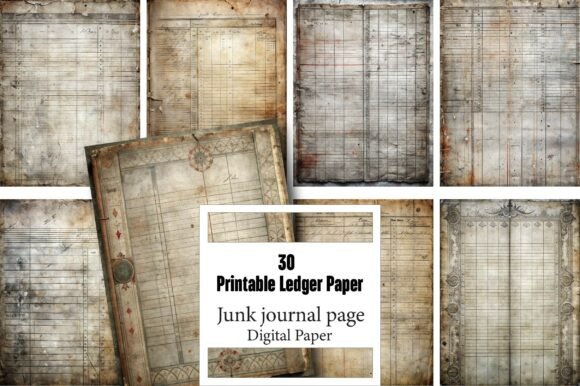
Printable Ledger Paper is more than a digital file; it is a template for order. At 300 DPI in JPG format, these files provide a pristine, scalable grid that can be resized without losing quality, making them adaptable to countless physical and digital outputs. This adaptability is its first strategic advantage. Whether you are designing a handmade junk journal to capture ideas, creating cohesive product labels for a candle line, or developing a trendy social media background to reinforce brand identity, the ledger grid provides a subtle, professional underpinning. It introduces visual consistency—a key component in building trust and recognition.
Thoughtful use begins with recognizing the ledger as a structural tool. Its grid can guide alignment in graphic designs, serve as a measurement guide in crafts like tumbler wraps or decoupage, or provide a writing framework for planners and notebooks. For entrepreneurs and small business owners, this transforms a simple download into a cost-effective, uniform asset for packaging, stationery, and marketing materials. The decision to employ it should stem from a need for underlying organization, either visibly in the final product or invisibly during the creation process.
Intentional Application: From Random Use to Goal-Oriented Outcomes
Using Printable Ledger Paper effectively requires moving beyond random application. The risk lies in treating it as mere decorative background without aligning it with a clear objective. For instance, selecting a ledger pattern for a party invitation because it looks "interesting" may not communicate the event's tone. However, choosing it intentionally for a bridal shower where the theme involves budgeting for a new home, or for a workshop invitation on financial planning, adds a layer of clever, relevant communication. The grid subtly echoes themes of organization and planning.
Practical Use Cases and Planning Considerations
Consider these grounded scenarios where Printable Ledger Paper serves a strategic role:
- Branding & Operational Consistency: A small soap maker uses the same ledger background for product labels, gift tags, and website graphics. This visual repetition reduces design time and creates a recognizable, trustworthy aesthetic across customer touchpoints.
- Project Planning & Productivity: Freelancers and educators print ledger sheets to create custom writing paper or digital planner covers. The grid aids in sketching project timelines, brainstorming in structured lists, or tracking learning goals, making abstract planning tangible.
- Creative Systemization: Artists and journalers use ledger paper in junk journals and collage crafting as a base layer. The grid helps balance compositions, align ephemera, and introduce order into otherwise chaotic creative processes, often leading to more polished final pieces.
- Cost-Effective Scaling: For KDP publishers or Etsy sellers, a single ledger paper file can be resized for book covers, bookmarks, and posters. This approach minimizes asset acquisition costs and ensures design harmony across a product line.
Before relying on it, consider the context of your end-user. For sublimation on mugs or t-shirts, the ledger pattern might appeal to a niche interested in finance, education, or vintage aesthetics. For digital presentations, it could frame data slides with a classic, authoritative look. The decision should align with the audience's expectations and your communication goals.
The Long-Term Value of a Structured Foundation
The enduring benefit of integrating Printable Ledger Paper into your workflow is the cultivation of a disciplined approach. It encourages thinking in terms of systems and alignment. In marketing, this might mean using ledger-derived graphics across all social media backgrounds and printed party napkins for a campaign, creating a seamless customer experience. In operations, printing ledger sheets for internal wall art or coasters in a startup office could subtly promote a culture of precision and accountability.
For hobbyists and professionals alike, the key is to treat the ledger not as a passive background but as an active grid—a space to fill with intention. Whether you are mapping out a DIY project plan, designing a set of playing cards with a vintage accounting theme, or creating wallpaper for a home office, the grid invites organization. It prompts you to consider placement, proportion, and progression.
Avoiding Common Pitfalls
The primary risk is aesthetic mismatch. A ledger's inherent connotation of order and calculation might clash with a brand seeking to convey pure whimsy or unbounded creativity. Furthermore, using it without a clear sizing strategy for different outputs (phone cases versus posters) can lead to resolution issues if not managed from the high-resolution source. Always start with the end-use in mind: what is the emotional and functional goal of the final product?
Ultimately, Printable Ledger Paper is a strategic asset when used with purpose. It bridges the gap between analog organization and digital flexibility, offering a timeless structure that can be molded to support tangible results—from enhanced brand cohesion to more productive creative sessions. By downloading and applying these files with an eye for their underlying grid logic, you transform a simple printable into a tool for thoughtful design, systematic planning, and intentional communication.